
• HOME
  • SERVICES
    • CYBER SECURITY
    • RISK MANAGEMENT
    • DATA PRIVACY
    • PROCESS IMPROVEMENT
    • CHANGE MANAGEMENT
    • TRAINING
  • ABOUT
    • ADVANTAGES
    • METHODOLOGIES
    • A + RESULTS
    • CLIENTS
    • SPEAKING/WRITING
    • MISSION-VISION-VALUES
    • TEAM
    • PRESS RELEASES
  • CONTACT
  • BLOG
  • PODCAST

Key Updates to the NIST Cyber Security Framework

8 years ago
abstractfwd1987
No Comments

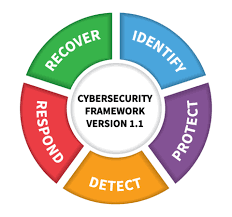
The first version of the NIST Cybersecurity Framework came about in Feb. 2014. In May 2017 President Donald Trump issued an executive order directing all federal agencies to use the framework to manage this risk, including future versions. Conversely, the private sector more so uses it as a non-uniform guide (sometimes in part) when needed. They use other more industry specific frameworks as well. On 04/17/18 NIST released the updated version of this standard-setting framework. We attended the NIST hosted webcast reviewing this on 04/27/18 and my key points are:

Framework 7 Step Process:

1)    Prioritize and Scope: Implementation tiers may be used to express varying risk tolerances.
2)    Orient
3)    Create a Current Profile
4)    Conduct a Risk Assessment
5)    Create a Target Profile: When used in conjunction with an Implementation Tier, characteristics of the Tier level should be reflected in the desired cybersecurity outcomes.
6)    Determine, Analyze, and Prioritize Gaps
7)    Implementation Action Plan

These recent changes to the framework are based on feedback collected through public calls for comments, questions received by team members, and workshops held from 2016 to 2017.

The newest version (1.1) includes these updates:

1)    Clarifies utility as a structure and language for organizing and expressing compliance with an organization’s own cybersecurity requirements.

2)    Added a new section for self-assessing cybersecurity risk which explains how organizations can use the framework. Emphasizes the role of measurements in self-assessment stresses critical linkage of business results:

  • Cost
  • Benefit
  • to cybersecurity risk management
  • Continued discussion of this linkage will occur under
  • Roadmap area – Measuring Cybersecurity

3)    Added a new section for supply chain risk management which focuses on identifying, assessing, and mitigating acquired products and services that may contain malicious functionality, be counterfeit, or have critical vulnerabilities because of poor manufacturing practices.

4)    Added new focus area for small business – what this means is yet to be seen.

“Engagement and collaboration will continue to be essential to the framework’s success,” said Matt Barrett of NIST. “The Cybersecurity Framework will need to evolve as threats, technologies and industries evolve. With this update, we’ve demonstrated that we have a good process in place for bringing stakeholders together to ensure the framework remains a great tool for managing cybersecurity risk”, he said.

PwC’s 2018 Global State of Information Security Survey (GSISS) indicated that respondents from healthcare payer and provider organizations, as well as oil and gas companies, said the NIST Cybersecurity Framework is the most commonly adopted set information security standards in their respective industries.

In another case, the University of Chicago’s Biological Sciences Division (BSD) successfully implemented the Cybersecurity Framework to help them comply with HIPAA and other federal data security rules.

If you want to know how to customize this to your organization please contact us.

Previous Post
Review of the 2018 Verizon Data Breach Report
Next Post
Secure360 Inspires Collaboration and Innovation: Three Best Talks

Leave a Reply Cancel reply

Your email address will not be published. Required fields are marked *

Fill out this field
Fill out this field
Please enter a valid email address.

The reCAPTCHA verification period has expired. Please reload the page.

Recent Posts

  • The Importance of the 3-2-1 Back-Up Method.
  • No Interview Needed to Join Microsoft After Getting Fired From OpenAI – Sam Altman.
  • Seven Cyber-Tech Observations of 2022 and What it Means for 2023.
  • The Main Purpose of Cryptocurrency Mixer and/or Splitter Services is Fraud and Money Laundering.
  • Top 16 Ways SMBs Can Mitigate Cyber Risks and Threats.
X
LinkedIn

Recent Posts

  • The Importance of the 3-2-1 Back-Up Method.
  • No Interview Needed to Join Microsoft After Getting Fired From OpenAI – Sam Altman.
  • Seven Cyber-Tech Observations of 2022 and What it Means for 2023.
  • The Main Purpose of Cryptocurrency Mixer and/or Splitter Services is Fraud and Money Laundering.
  • Top 16 Ways SMBs Can Mitigate Cyber Risks and Threats.

Recent Comments

  • Abstract Forward Partners with Ignyte on Abstract Forward Partners With Newer Cyber GRC Tool: Ignyte Assurance Platform
  • Abstract Forward Partners with Ignyte | Ignyte Assurance Platform on Abstract Forward Partners With Newer Cyber GRC Tool: Ignyte Assurance Platform
  • Michael Kirk Please Interview US for your new Prince movie “Prince: R U Listening”! | Economic, Technology, & Marketing Thought Leadership on Social Tech CEO Jimmy Chamberlin Rejoins Smashing Pumpkins
  • Michael Kirk Please Interview US for your new Prince movie “Prince: R U Listening”! | Economic, Technology, & Marketing Thought Leadership on Prince and Purple Rain 30 years later: Business and Music Innovation
  • brianfpennington on Demystifying 9 Common Types of Cyber Risk

Archives

  • November 2023
  • January 2023
  • June 2022
  • April 2022
  • January 2022
  • June 2021
  • December 2020
  • August 2020
  • March 2020
  • January 2020
  • August 2019
  • March 2019
  • December 2018
  • November 2018
  • October 2018
  • September 2018
  • August 2018
  • July 2018
  • June 2018
  • May 2018
  • April 2018
  • March 2018
  • December 2017
  • November 2017
  • February 2017
  • January 2017
  • December 2016
  • November 2016
  • July 2016
  • May 2016
  • March 2016
  • February 2016
  • August 2015
  • June 2015
  • February 2015
  • January 2015
  • December 2014
  • August 2014
  • May 2014
  • April 2014

Categories

  • 2016 election hack
  • 2016 tech review
  • 360 net lab
  • 80s music
  • Alternative music
  • Amazon
  • Android
  • apple
  • arlines hack
  • artificial intelligence
  • Billy Corgan
  • Bitcoin security
  • british airways breach
  • Business
  • business analysis
  • business continuity
  • Chinese hackers
  • cloud computing
  • CoinHive
  • Coronavirus malware
  • COVID-19 scams
  • crypto mixing
  • Crypto Money Laundering
  • crypto-jacking
  • currency
  • cyber insurance
  • Cyber Security
  • cyber security framework
  • Cyber-Espionage
  • Cybersecuity summit
  • data back up
  • data breach
  • Data Exfiltration Detection
  • data security
  • Denial of Service (DoS) Attacks
  • Direct x12
  • disinformation
  • drones
  • election security
  • equifax breach
  • esports security
  • EU Privacy
  • FDIC
  • federal reserve
  • GDPR
  • gdpr test british airways breach
  • google glass
  • Google Mandiant
  • grc
  • GroupOn
  • iam
  • Ignyte Assurance Platform
  • iphone
  • Jimmy Chamberlin
  • leadership vs. management
  • LinkedIn
  • Live Streaming
  • LiveOne
  • Lumia Phone
  • management consulting
  • Microsoft
  • microsoft azure
  • Microsoft Continuum
  • MikroTik Routers
  • MN Start-Up
  • mobile os
  • mobile web
  • NASA
  • navy cyber hack
  • net neutrality
  • network intrusion
  • OpenStack
  • PBS Frontline
  • personal aircraft
  • phone market share
  • Prince: R U Listening
  • project management
  • Project Sparta
  • Purple Rain
  • Rackspace
  • ransomware
  • ransomware removal
  • retail
  • risk management
  • Salesforce
  • self driving cars
  • small business
  • small business cyber security
  • Smashing Pumpkins
  • SME Infosec
  • Social Media
  • socrates
  • sony pictures
  • stalkerware
  • Stuxnet
  • target
  • Tech Year In Review
  • third party risk management
  • Unit 61398
  • vendor risk mgmt
  • video surveillance
  • Web App Attack
  • WEP vs WPA2
  • Windows 10

Meta

  • Log in
  • Entries feed
  • Comments feed
  • WordPress.org

All rights reserved © 2018 to present. Abstract Forward Consulting, LLC. Privacy Policy | Terms of Service | Web Accessibility | Sitemap.