
• HOME
  • SERVICES
    • CYBER SECURITY
    • RISK MANAGEMENT
    • DATA PRIVACY
    • PROCESS IMPROVEMENT
    • CHANGE MANAGEMENT
    • TRAINING
  • ABOUT
    • ADVANTAGES
    • METHODOLOGIES
    • A + RESULTS
    • CLIENTS
    • SPEAKING/WRITING
    • MISSION-VISION-VALUES
    • TEAM
    • PRESS RELEASES
  • CONTACT
  • BLOG
  • PODCAST

Esports Cyber Threats and Mitigations

5 years ago
abstractfwd1987
No Comments

On 06/10/21 major Esports software company, Electronic Arts (EA) was hacked. They are one of the biggest esports companies in the world. They count many major hit games including Battlefield, The Sims, Titanfall, and Star Wars: Jedi Fallen Order, in addition to many online league sports games; and they develop and/or publish many others. An EA spokesperson described game code and related tools as stolen in the hack and that they are still investigating the privacy implications. Early reports however indicated that a whopping 780GB of data was stolen (Balaji N, GBHackers On Security, 06/12/21).

Given this recent hack here is an updated overview of some of the esports cyber threats and mitigations.
Fig 1. EA Sports Hacked Image. Balaji N, GBHackers On Security, 06/12/21.

Threats:

1. Aimbots and Wallhacks

As esports revenues and player prizes increase, more players will look for opportunities to exploit the game to gain an advantage over competitors. Many underground hacker forums reveal hundreds of aimbots and wallhacks. Prices for such tools start as low as $5.00 but go as high as $2,000. These are essentially cheat tools for sale but they are technically prohibited in official competitions (Trend Micro, 2019).

Aimbots are a type of software used in multiplayer first-person shooter games to provide varying levels of automated targeting that gives the user an advantage over other players. Wallhacks allow the player to change the properties of in-game walls by making them transparent or nonsolid, making it easier to find or attack enemies.

Fig 2. Wallhack Cheat For WarZone (May 6th 2020, Tom Warren).
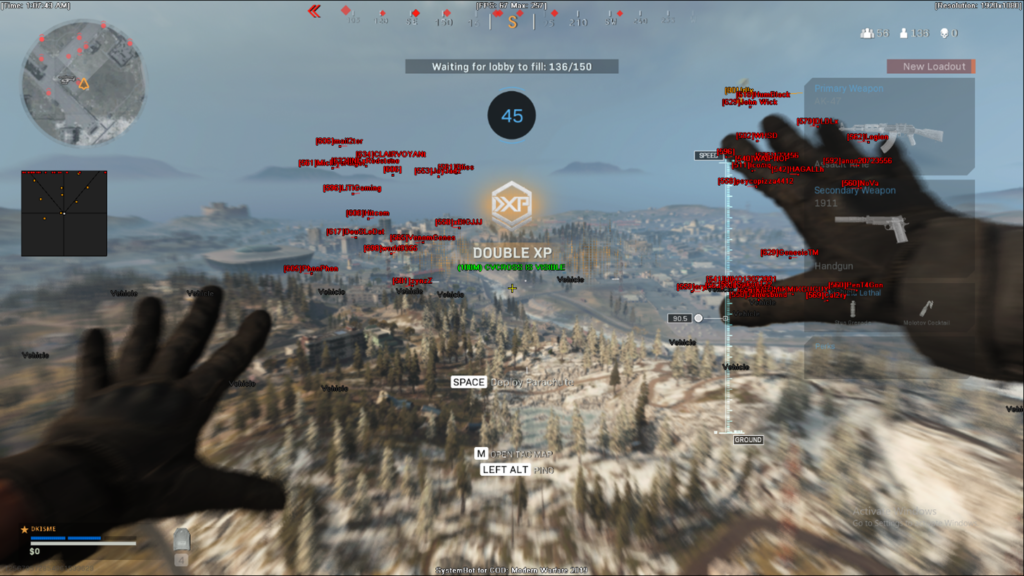
Fig 2. Wallhack Cheat For WarZone (May 6th 2020, Tom Warren).

2. Hidden Hardware Hacks

Some of the hardware used in competitions can be manipulated by hackers with ease. For each tournament, a gaming board sets the rules on what equipment they allow tournament participants to use. A lot of professional tournaments allow players to bring their own mouse and keyboard, which have been known to house hacks.

Case in point, in 2018 a Dota 2 team was disqualified from a $15 million tournament after judges caught one of its members using a programmable mouse – the Synapse 3 configuration tool. The mouse allowed the player to perform movements that would be impossible without macros, a shortcut of preset key sequences not possible with standard nonprogrammable hardware (Trend Micro, 2019).

3. Stolen Accounts and Credentials

Threat actors have been increasingly targeting the esports industry. They do this by harvesting and selling user ID and password data of both internal and external systems for esports companies. A study by threat intelligence company KELA indicated that more than half a million login credentials tied to the employees of 25 leading game publishers have been found for sale on dark web bazaars (Amer Owaida, Welivewellsecurity, 01/05/2021).

4. Ransomware and DDoS (Distributed Denial of Services) Attacks

Ransomware can come via phishing, smishing, spam, or via free compromised plug-ins. When installed on the gaming platform they lock everything up and force the host to pay ransom in the form of difficult-to-trace digital currency like Bitcoin. Interestingly, researcher Danny Palmer of ZDnet cited Trend Micro’s research when he described the marriage of ransomware and DDoS attacks as follows:

“Researchers also warn that attackers could blackmail esports tournament organizers, demanding a ransom payment in exchange for not launching a DDoS attack – something which organizers might consider given how events are broadcast live and the reputational damage that will occur to the host organizer if the event gets taken offline” (Danny Palmer, ZDnet, 10/29/2019).

Mitigations:

1. Use a VPN (Virtual Private Network)

VPN establishes an encrypted tunnel between you and a remote server ran by the VPN provider. All your internet traffic is run through this tunnel, so your data is secure from eavesdropping. Your real IP address and location is masked preventing IPS tracking as your traffic is exiting the VPN server. You can also more confidently use public WIFI with a VPN.

2. Use A Password Management Tool and Strong Passwords

Another way to stay safe is by setting passwords that are longer, complex, and thus hard to guess. Additionally, they can be stored and encrypted for safekeeping using a well-regarded password vault and management tool. This tool can also help you to set strong passwords and can auto-fill them with each login — if you select that option. Yet using just the password vaulting tool is all that is recommended. Doing these two things makes it difficult for hackers to steal passwords or access your gaming accounts.

3. Use Only Whitelisted Gaming Sites Not Blacklisted Ones or Ones Found Via the Dark Web

Use only approved whitelisted gaming platforms and sites that do not expose you to data leakages or intrusion on your privacy. Whitelisting is the practice of explicitly allowing some identified websites access to a particular privilege, service, or access. Blacklisting is blocking certain sites or privileges. If a site does not assure your privacy, do not even sign up let alone participate.

Previous Post
Seven Impactful Cyber-Tech Trends of 2020 and What it Means for 2021.
Next Post
Five Cyber-Tech Trends of 2021 and What it Means for 2022.

Leave a Reply Cancel reply

Your email address will not be published. Required fields are marked *

Fill out this field
Fill out this field
Please enter a valid email address.

The reCAPTCHA verification period has expired. Please reload the page.

Recent Posts

  • The Importance of the 3-2-1 Back-Up Method.
  • No Interview Needed to Join Microsoft After Getting Fired From OpenAI – Sam Altman.
  • Seven Cyber-Tech Observations of 2022 and What it Means for 2023.
  • The Main Purpose of Cryptocurrency Mixer and/or Splitter Services is Fraud and Money Laundering.
  • Top 16 Ways SMBs Can Mitigate Cyber Risks and Threats.
X
LinkedIn

Recent Posts

  • The Importance of the 3-2-1 Back-Up Method.
  • No Interview Needed to Join Microsoft After Getting Fired From OpenAI – Sam Altman.
  • Seven Cyber-Tech Observations of 2022 and What it Means for 2023.
  • The Main Purpose of Cryptocurrency Mixer and/or Splitter Services is Fraud and Money Laundering.
  • Top 16 Ways SMBs Can Mitigate Cyber Risks and Threats.

Recent Comments

  • Abstract Forward Partners with Ignyte on Abstract Forward Partners With Newer Cyber GRC Tool: Ignyte Assurance Platform
  • Abstract Forward Partners with Ignyte | Ignyte Assurance Platform on Abstract Forward Partners With Newer Cyber GRC Tool: Ignyte Assurance Platform
  • Michael Kirk Please Interview US for your new Prince movie “Prince: R U Listening”! | Economic, Technology, & Marketing Thought Leadership on Social Tech CEO Jimmy Chamberlin Rejoins Smashing Pumpkins
  • Michael Kirk Please Interview US for your new Prince movie “Prince: R U Listening”! | Economic, Technology, & Marketing Thought Leadership on Prince and Purple Rain 30 years later: Business and Music Innovation
  • brianfpennington on Demystifying 9 Common Types of Cyber Risk

Archives

  • November 2023
  • January 2023
  • June 2022
  • April 2022
  • January 2022
  • June 2021
  • December 2020
  • August 2020
  • March 2020
  • January 2020
  • August 2019
  • March 2019
  • December 2018
  • November 2018
  • October 2018
  • September 2018
  • August 2018
  • July 2018
  • June 2018
  • May 2018
  • April 2018
  • March 2018
  • December 2017
  • November 2017
  • February 2017
  • January 2017
  • December 2016
  • November 2016
  • July 2016
  • May 2016
  • March 2016
  • February 2016
  • August 2015
  • June 2015
  • February 2015
  • January 2015
  • December 2014
  • August 2014
  • May 2014
  • April 2014

Categories

  • 2016 election hack
  • 2016 tech review
  • 360 net lab
  • 80s music
  • Alternative music
  • Amazon
  • Android
  • apple
  • arlines hack
  • artificial intelligence
  • Billy Corgan
  • Bitcoin security
  • british airways breach
  • Business
  • business analysis
  • business continuity
  • Chinese hackers
  • cloud computing
  • CoinHive
  • Coronavirus malware
  • COVID-19 scams
  • crypto mixing
  • Crypto Money Laundering
  • crypto-jacking
  • currency
  • cyber insurance
  • Cyber Security
  • cyber security framework
  • Cyber-Espionage
  • Cybersecuity summit
  • data back up
  • data breach
  • Data Exfiltration Detection
  • data security
  • Denial of Service (DoS) Attacks
  • Direct x12
  • disinformation
  • drones
  • election security
  • equifax breach
  • esports security
  • EU Privacy
  • FDIC
  • federal reserve
  • GDPR
  • gdpr test british airways breach
  • google glass
  • Google Mandiant
  • grc
  • GroupOn
  • iam
  • Ignyte Assurance Platform
  • iphone
  • Jimmy Chamberlin
  • leadership vs. management
  • LinkedIn
  • Live Streaming
  • LiveOne
  • Lumia Phone
  • management consulting
  • Microsoft
  • microsoft azure
  • Microsoft Continuum
  • MikroTik Routers
  • MN Start-Up
  • mobile os
  • mobile web
  • NASA
  • navy cyber hack
  • net neutrality
  • network intrusion
  • OpenStack
  • PBS Frontline
  • personal aircraft
  • phone market share
  • Prince: R U Listening
  • project management
  • Project Sparta
  • Purple Rain
  • Rackspace
  • ransomware
  • ransomware removal
  • retail
  • risk management
  • Salesforce
  • self driving cars
  • small business
  • small business cyber security
  • Smashing Pumpkins
  • SME Infosec
  • Social Media
  • socrates
  • sony pictures
  • stalkerware
  • Stuxnet
  • target
  • Tech Year In Review
  • third party risk management
  • Unit 61398
  • vendor risk mgmt
  • video surveillance
  • Web App Attack
  • WEP vs WPA2
  • Windows 10

Meta

  • Log in
  • Entries feed
  • Comments feed
  • WordPress.org

All rights reserved © 2018 to present. Abstract Forward Consulting, LLC. Privacy Policy | Terms of Service | Web Accessibility | Sitemap.